Have you ever encountered a website or application that made a lasting impression? The graphics, menus, buttons, and links seemed flawless, and every aspect of the design complemented the brand identity. A design system is what makes this possible.
Some people may disagree, but design systems are genuinely useful. More importantly, they do not eliminate creative freedom. Although a design system is a collection of principles, rules, and reusable components, you do not have to follow it rigidly. You can use its components and adapt them creatively to serve the needs of your design.
You need to use design systems to create work that captures users’ attention. But is consistency really that important? Do design systems actually work? And what does the future hold for design systems in 2025 and beyond?
Let us find out.
Why Does Consistency Matter in User Experience?
The design field changes rapidly and is difficult to predict. It evolves every day. What is popular today may no longer be relevant tomorrow.
When discussing unpredictability, consistency becomes especially important. Consistency is one of the most vulnerable design principles affecting user experience. When things remain familiar, people develop greater trust in a product. A lack of consistency, by contrast, can damage brand reputation and business results.
Does consistency guarantee a good user experience? The answer is not that simple.
Consistency in UX design is important, but too much consistency can make a design boring. Consistent elements strengthen brand recognition, yet repeatedly using the same design can create visual fatigue.
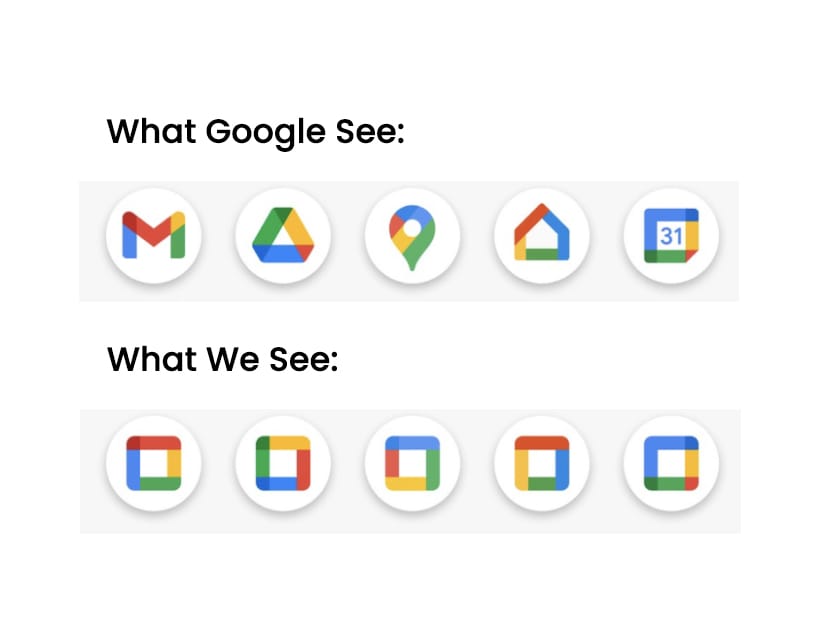
Consider an example. Several years ago, Google changed the appearance of its application icons so they would share a unified style and appear to belong to the same family. Yet we must admit that this highly uniform approach made the icons feel less distinctive.
What is the key lesson? Consistency matters, but sometimes breaking convention matters even more. Creative consistency means presenting things in an engaging way while preserving the brand’s overall identity and feel. That is what we need.
Now that we understand design consistency and its impact on the user experience of digital products, let us discuss design systems.
Are Design Systems Still Important in 2025?
Design systems have long been debated. Some people argue that they save time by reducing rework and enabling component reuse, citing companies such as Google, IBM, and Adobe. Others believe design systems waste time and suppress creativity.
Do they really suppress creativity? Absolutely not. Design systems are not the enemy of creativity. On the contrary, they help designers direct their creativity more effectively.
Almost everyone likes templates or Figma libraries. Are they efficient? Certainly. Are they boring? That depends. Designers need to use a design system while creating elements that fully realize its potential.
The reality is that design systems do not always succeed. Only 40% are considered successful. Why do the remaining 60% fail? What goes wrong?
By 2025, businesses must provide a unified user experience. User interactions need to flow seamlessly across every device and channel. Product and marketing teams should therefore work together to deliver a consistent experience.
What Are the Main Reasons Design Systems Fail?
-
Lack of adaptability
-
Excessive visual uniformity
-
Poor teamwork
-
Inadequate maintenance
-
Ignoring users
UX design should balance consistency with creativity. A design must be engaging while remaining coherent. To gain the greatest value, designers need to push beyond the boundaries of the system.
Consider this example. Look at this LEGO car.

Now look at this one.

Both are built from LEGO bricks, but the second is more appealing than the first. Why? The red car is compelling because the bricks are not used in the usual way. Through thoughtful planning, the same LEGO pieces produce an extraordinary design.
A design system is like a set of LEGO bricks, while the car is the final design. What matters is how the system is used.
Here are several fundamental ideas about design systems that everyone should understand.
-
A design system is more than a component library. It addresses the what, how, and why of design.
-
A design system is a tool. Do not assume that an excellent system guarantees
high-quality results. It is simply a tool intended to accelerate the design process.
-
Design systems are never complete. They provide a foundation upon which designers build and improve.
Design systems cannot be defined with absolute precision; they can only be described broadly. Let us examine several of their characteristics.
-
Design systems are intended to maintain consistency. Excessive consistency, however, creates monotony.
-
They accelerate development. Yet faster development can sometimes reduce design quality.
-
They allow designers to focus on specific problems. At the same time, they can confine designers within predefined boundaries.
There is no absolute black-and-white answer when using a design system. Everything exists in a gray area. You need to know how to use the system to create excellent work rather than depending on it completely or ignoring it entirely.
The Role of Design Systems in Maintaining a Consistent User Experience
Design systems do far more than maintain visual consistency. They support design at scale, bridge the gap between product development and design, and can even stimulate creativity. Here is how.
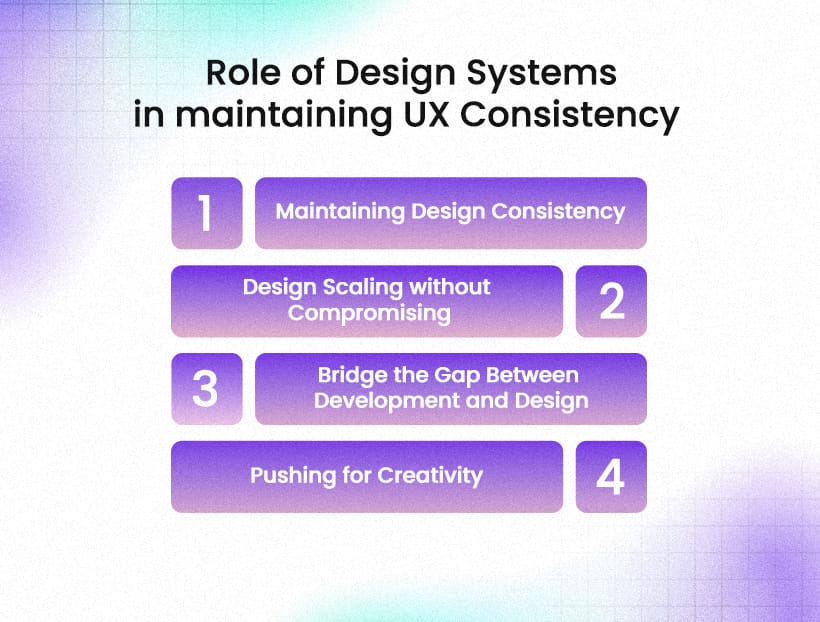
1. Maintaining Design Consistency
Imagine using an application whose buttons have different colors and sizes on every page. Navigation is also confusing because menus are arranged differently across sections. Would you continue using it? Probably not.
You would become frustrated because interacting with the application requires unnecessary time and effort. A design system helps by preserving consistency, making interactions smoother and more enjoyable.
Design systems provide ready-made components such as forms, buttons, text styles, and layouts that look the same on every page. When users repeatedly encounter the same interaction patterns, they develop muscle memory, enabling smooth navigation.
2. Scaling Design Without Compromising Quality
For some products, scaling design can be a major challenge. As the product grows, maintaining design quality becomes increasingly important.
Without an appropriate and scalable design system, designers may create elements that do not belong to the established patterns, resulting in a fragmented user experience. A design system enables element reuse, saving time while maintaining interface consistency.
3. Bridging the Gap Between Development and Design
Clear communication between design and development teams is essential. Miscommunication creates different interpretations and ultimately leads to an inconsistent product. Design systems help address this problem by providing guidelines and documentation that support collaboration and keep both teams working toward the same goal.
4. Supporting Creativity
As discussed earlier, some people believe design systems limit creativity and force designers to follow established conventions. A good design system, however, frees designers from repetitive tasks so they can focus on problems that genuinely require creative thinking.
Design Systems in Practice: Real-World Examples
Still not convinced that design systems work? Leading companies such as Google, Apple, Microsoft, and Adobe have all developed their own systems, each with a distinct approach to specific design challenges.
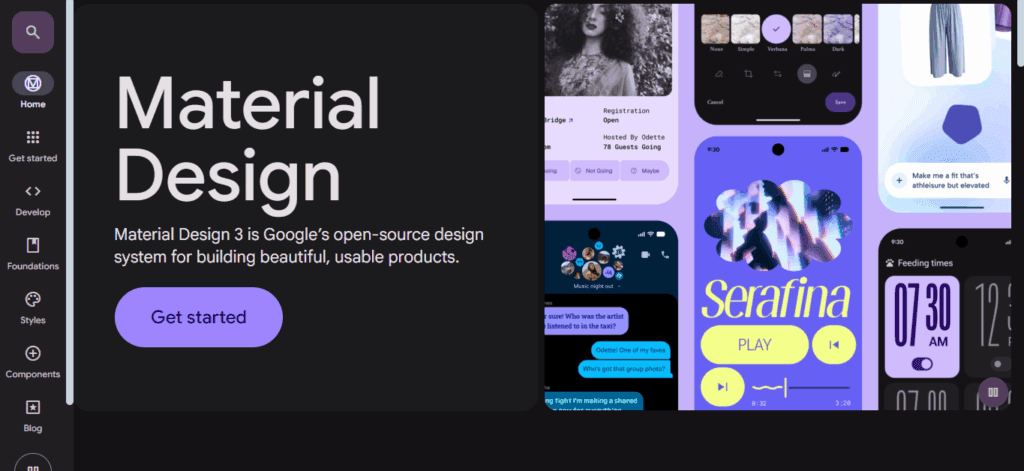
Google Material Design
(Source: Material Design)
Released in 2014, this system quickly became one of the most popular and influential design systems. Its principles can be seen throughout Google products such as Gmail, Android, and Google Drive.
Apple Human Interface Guidelines
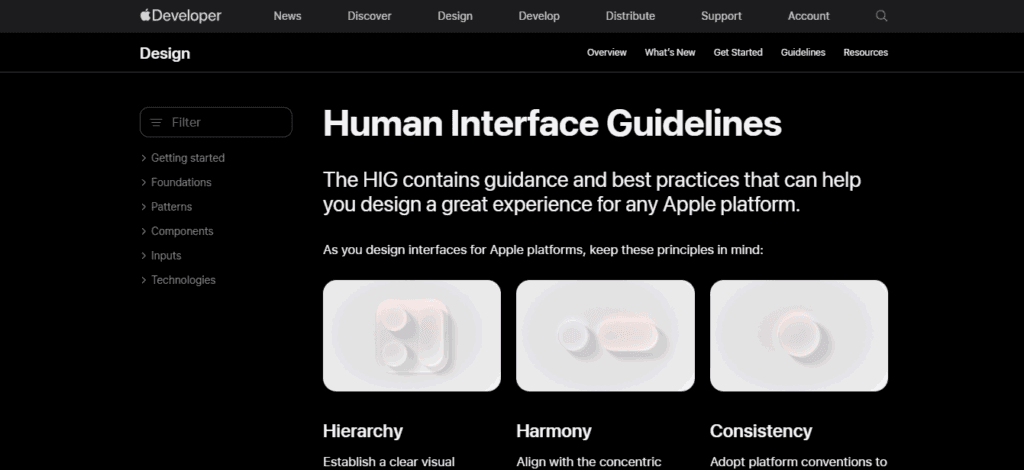
(Source: Human Interface Guidelines)
Apple’s Human Interface Guidelines, or HIG, are known for close attention to detail and an emphasis on creating smooth, easy-to-use applications. Although primarily intended for apps, the system is also relevant to web design.
IBM Carbon Design System
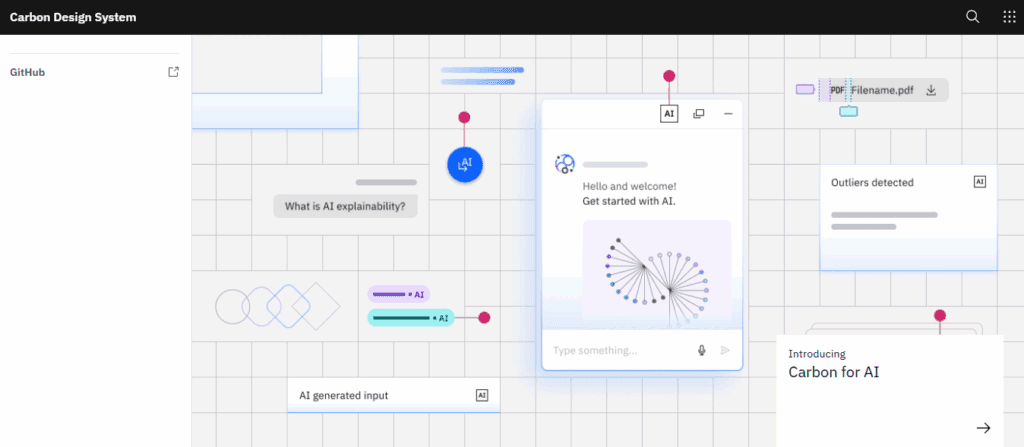
(Source: Carbon Design System)
This is a powerful open-source design system. Created for enterprise applications and websites, IBM Carbon is known for usability, flexibility, and scalability. It is designed to support large projects while preserving consistency.
Microsoft Fluent
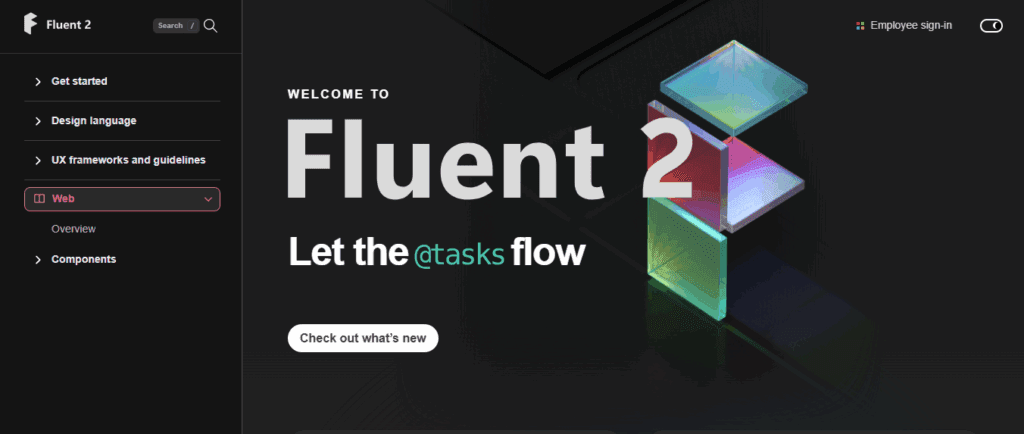
(Source: Fluent)
This system focuses on providing engaging and intuitive user experiences across platforms. Fluent makes interactions and navigation feel natural, creating a sense of ease and familiarity. It is particularly suitable for Windows, iOS, Android, and web applications and services. It can be seen in Microsoft flagship products such as Teams and Office 365.
Adobe Spectrum
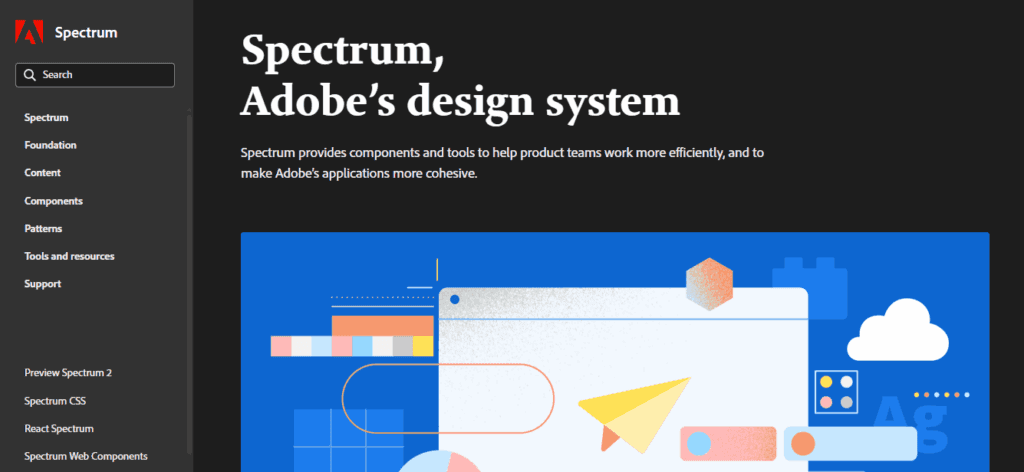
(Source: Spectrum)
Developed by Adobe, Spectrum combines usability with flexibility. Its adaptable theming system and extensive component library make it a popular choice among web designers. The system is known for adaptability and consistency.
Looking Ahead: Design-System Trends for 2025 and Beyond
By now, you should understand the importance of design systems to user experience. They are foundational to the development of digital products.
Design systems not only preserve consistency, but also provide scalability and efficiency. This section explores three major trends that will transform them.
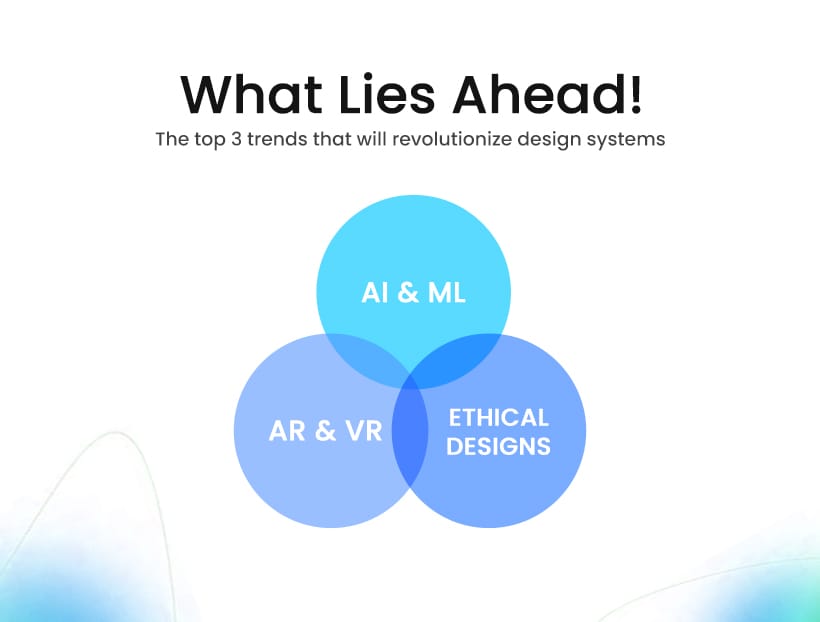
Artificial Intelligence and Design Systems
Artificial intelligence and machine learning will automate workflows, making systems more personalized and intelligent.
-
Automation:AI can help choose colors, create page layouts, and build buttons or menus based on how people use an application or website.
-
Accessibility:Machine learning can identify compliance issues and recommend corrections.
-
Personalization:Real-time data will support real-time adjustments, improving the user experience.
AR and VR Integration
As augmented reality and virtual reality become more widespread, design systems will evolve to support immersive experiences in the following ways:
-
3D UI/UX Guidelines:Design systems will adapt to help create immersive user experiences.
-
Standardized Components:Integrating standardized components will preserve consistency throughout AR and VR development.
-
Prototyping Tools:These will allow designers to test ideas in virtual spaces before building them.
Ethical Design
As people become more concerned about the planet and about doing the right thing, design systems will increasingly be developed in environmentally responsible ways.
-
Inclusive Design:Design systems will help ensure that products can be used by everyone.
-
Sustainable Interfaces:Designers will seek to create products that use less data and energy while maintaining excellent performance.
-
Privacy-Focused Design:This will strengthen user trust and data transparency.
Final Thoughts
Consistency cannot be ignored in design. It can be interpreted flexibly, but it cannot be abandoned completely. At the same time, relying on it too heavily can restrict design. The solution is creative consistency: preserve coherence while introducing originality.
Design systems are intended to support this balance. They provide the building blocks for your work. In design, rules are sometimes made to be broken, and your willingness to challenge them may establish an example for other designers. This is especially important when design is expected to produce exceptional business results.
Remember that a design system is neither an enemy nor a friend. It is simply a tool that helps you begin creating exceptional work. As artificial intelligence, machine learning, virtual reality, augmented reality, and ethical design continue to develop, design systems will transform the business landscape. Use them thoughtfully to achieve results beyond expectations.