When designing a corporate website, product interface, or marketing page, many people encounter the same problem:
“The page is not bad, but users simply do not click or convert.”
Across numerous UI and website-optimization projects at 58UI Design Studio, we have repeatedly confirmed one principle:
👉 User clicks are not random; they follow highly consistent psychological patterns.
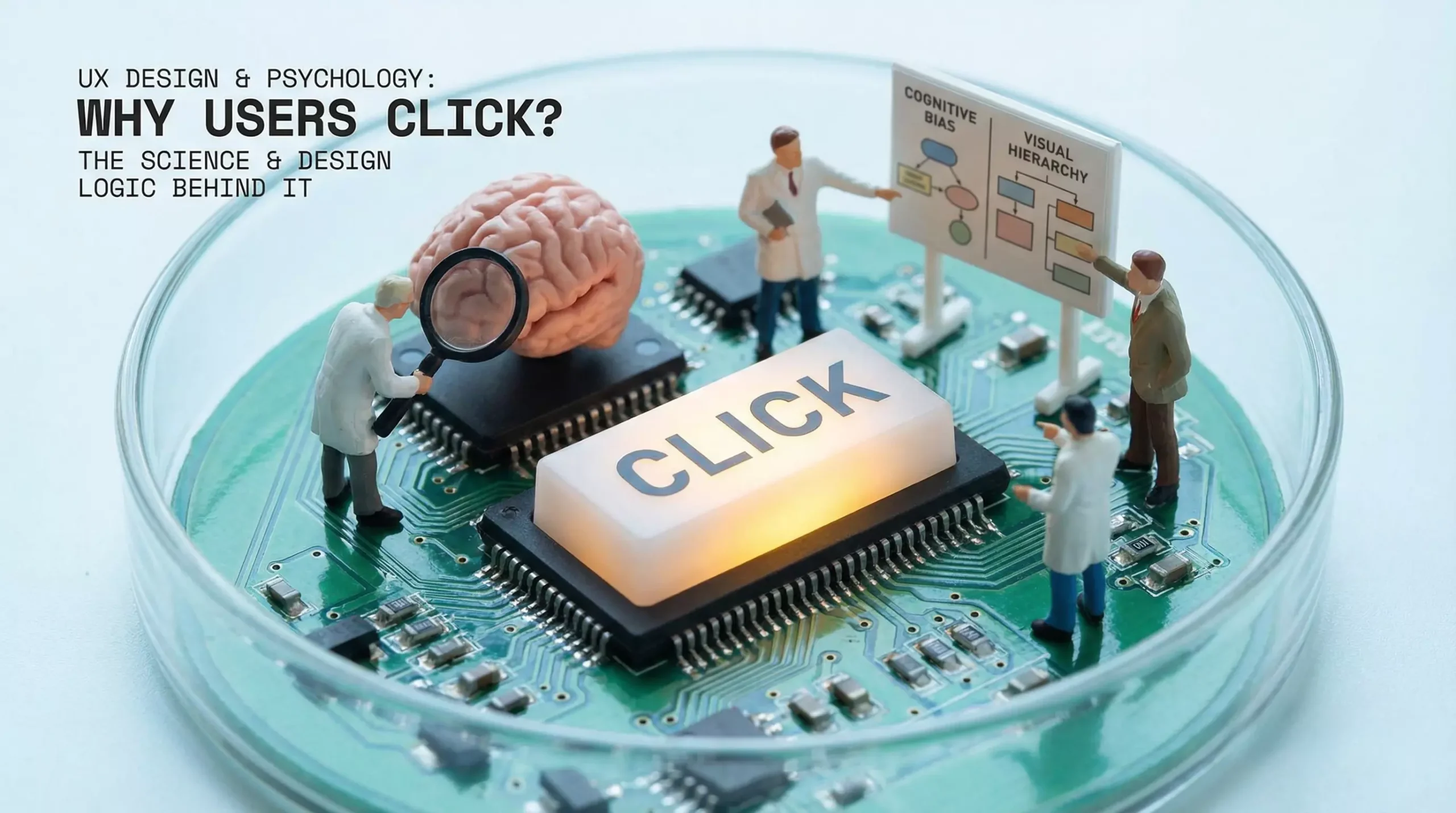
UX, or user-experience design, is essentially a form of applied psychology.
Understanding how users see, think, feel, and decide is often more important than pursuing visual appeal alone.
Why Is Psychology Essential to UX Design?
The goal of UX design is not merely to make something usable. It asks:
-
Is it easy to understand?
-
Does it make people feel secure?
-
Does it reduce the effort required to decide?
-
Does it guide users toward completing key actions?
All of these questions point to one central issue: user psychology.
Information architecture, button placement, color, copy, and animation all influence the user’s attention, emotions, and decision path.
Three Core Psychological Mechanisms Behind User Clicks
1️⃣ Cognitive Processing: How Users Understand a Page
When browsing a page, users experience three important cognitive processes:
-
Perception
A clear visual hierarchy, high-quality imagery, and an explicit CTA are more likely to be perceived as important and credible. -
Attention
High-contrast buttons, essential first-screen information, and key content visible above the fold all compete for attention. -
Memory
Familiar layouts and conventional interactions reduce the learning curve and make an experience easier to accept.
This is why 58UI Design Studio rarely breaks established user habits merely to make a website or product feel “cool.”
2️⃣ Emotional Influence: Why Users Are Willing to Click
Function determines whether something can be used; emotion determines whether people choose to use it.
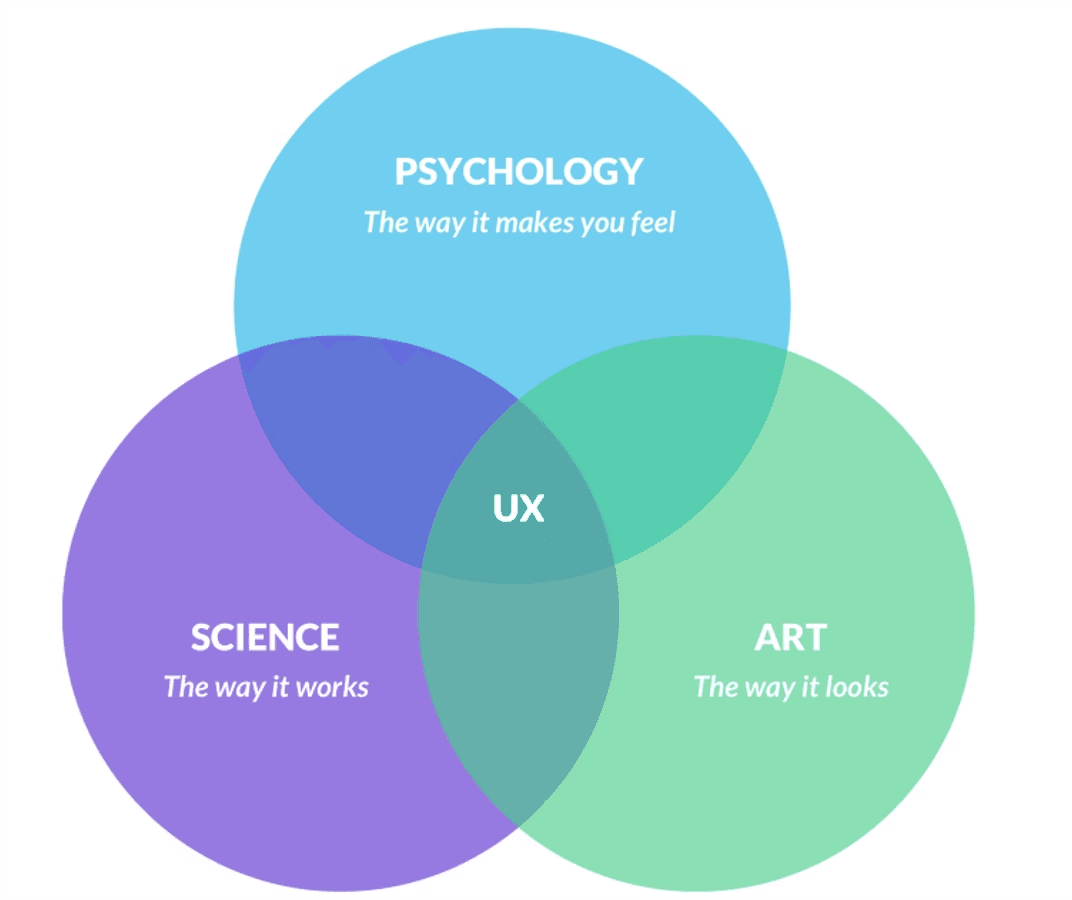

In Emotional Design, psychologist Don Norman argues:
People are more likely to like, trust, and choose products that make them feel good.
For example:
-
Clean visuals → safety and professionalism
-
Refined animation → a feeling of being respected and cared for
-
Friendly copy → relaxation without sales pressure
By contrast, disorganized, complicated, and opaque pages quickly create anxiety and distrust.
3️⃣ Practical Applications of Emotional Design
A classic example is GEICO’s gecko mascot:
Its relaxed, memorable character reduces the natural emotional distance associated with insurance products.

Common forms of emotional design in corporate websites and products include:
-
Color psychology, such as stable tones for finance and rational tones for technology
-
Micro-interactions that communicate feedback, progress, and completion
-
Story-driven content featuring case studies and real users
-
Social proof through customers, data, and reviews
User-Centered UX Design Principles
UX design that genuinely improves conversion always begins from the user’s perspective.
✅ Usability and Accessibility
Approximately 1.3 billion people worldwide experience some form of disability or access limitation.
Accessible design is not only an ethical responsibility, but also a commercial opportunity.
Common practices include:
-
Keyboard operability
-
Sufficient color contrast
-
Alternative descriptions for images
-
Adjustable font sizes
✅ Intuitive Navigation Means Higher Conversion
Intuitive navigation creates value by:
-
Reducing the effort required to think
-
Improving conversion rates
-
Reducing customer-service and communication costs
This is why 58UI Design Studio places exceptional importance on information architecture and journey planning in corporate website design.
✅ Visual Hierarchy and Information Architecture
A strong page should resemble a well-organized store:
-
Important content appears first
-
Secondary information does not create distraction
-
Action buttons remain visible
Common methods include:
-
A clear H1/H2 hierarchy
-
Controlled whitespace
-
High-contrast CTAs
-
Stronger emphasis on key information
Behavioral Design: How to Guide Users Toward Action
UX is not merely passive presentation; it involves active guidance.
🔹 Common Applications of Behavioral Economics
-
Scarcity: “Only two places remaining”
-
Social proof: “Chosen by more than 3,000 users”
-
Loss aversion: “Miss this opportunity and the discount will no longer be available”
🔹 The Fogg Behavior Model: B = MAT
For a behavior to occur, three elements are required:
-
Motivation
-
Ability
-
Trigger
The essence of UX design is the continuous optimization of these three factors.
Personalization and a Sense of Control Are Sources of Trust
At Netflix, personalized recommendations account for 80% of viewing activity.
Users place greater trust in:
-
Settings they can control
-
Clear explanations of data use
-
Experiences that offer choice instead of pressure
Transparency creates trust.
Positive and Negative Cases: Lessons from UX Successes and Failures
✅ Successful Examples
-
Amazon one-click ordering: reduces decision friction
-
LinkedIn profile-completeness progress bar: applies the goal-gradient effect
-
Apple’s minimalist design: reduces cognitive load
❌ Failed Examples
-
Snapchat’s aggressive redesign → user loss
-
Google+ forced following → privacy concerns and resistance
-
Airbnb Trips → information overload
There is only one conclusion: do not work against user psychology.
UX Design Must Be Tested and Iterated
Even an excellent design needs validation.
-
User testing
-
Behavioral data
-
A/B testing
Spotify, Amazon, and Netflix all grow through continuous experimentation.
Future Trends in UX Design
-
AI-driven personalized experiences
-
Immersive AR and VR interactions
-
Voice and multimodal interaction
-
Design that pays greater attention to emotion and psychological state
Summary: Effective UX Is Design That Makes Users Feel Understood
UX design is never decoration. It is an expression of respect for and understanding of human nature.
At 58UI Design Studio, we believe:
Good design allows users to continue almost without thinking.
If your product, website, or conversion performance is disappointing,
the problem may not be that the visuals are insufficiently impressive. The problem may be that the psychological journey is misaligned.