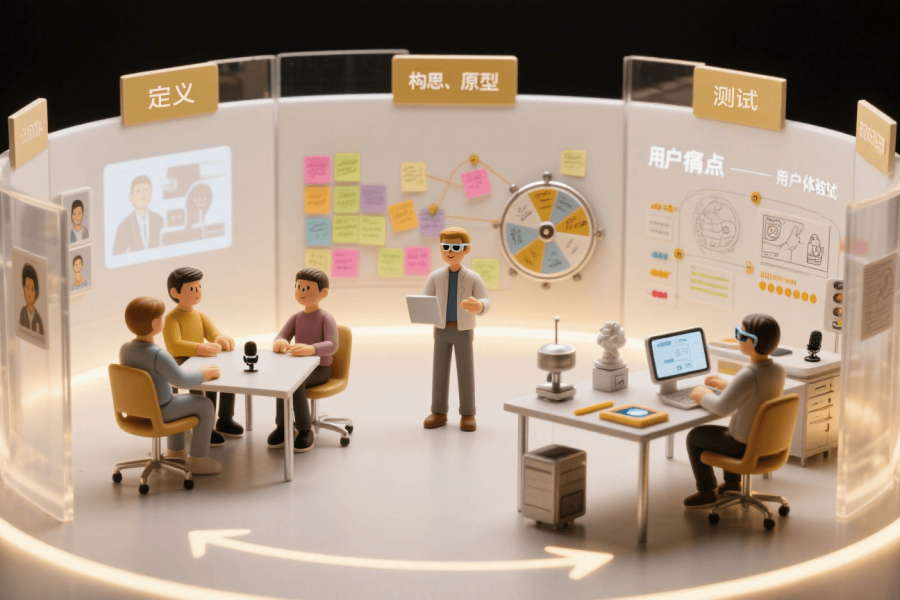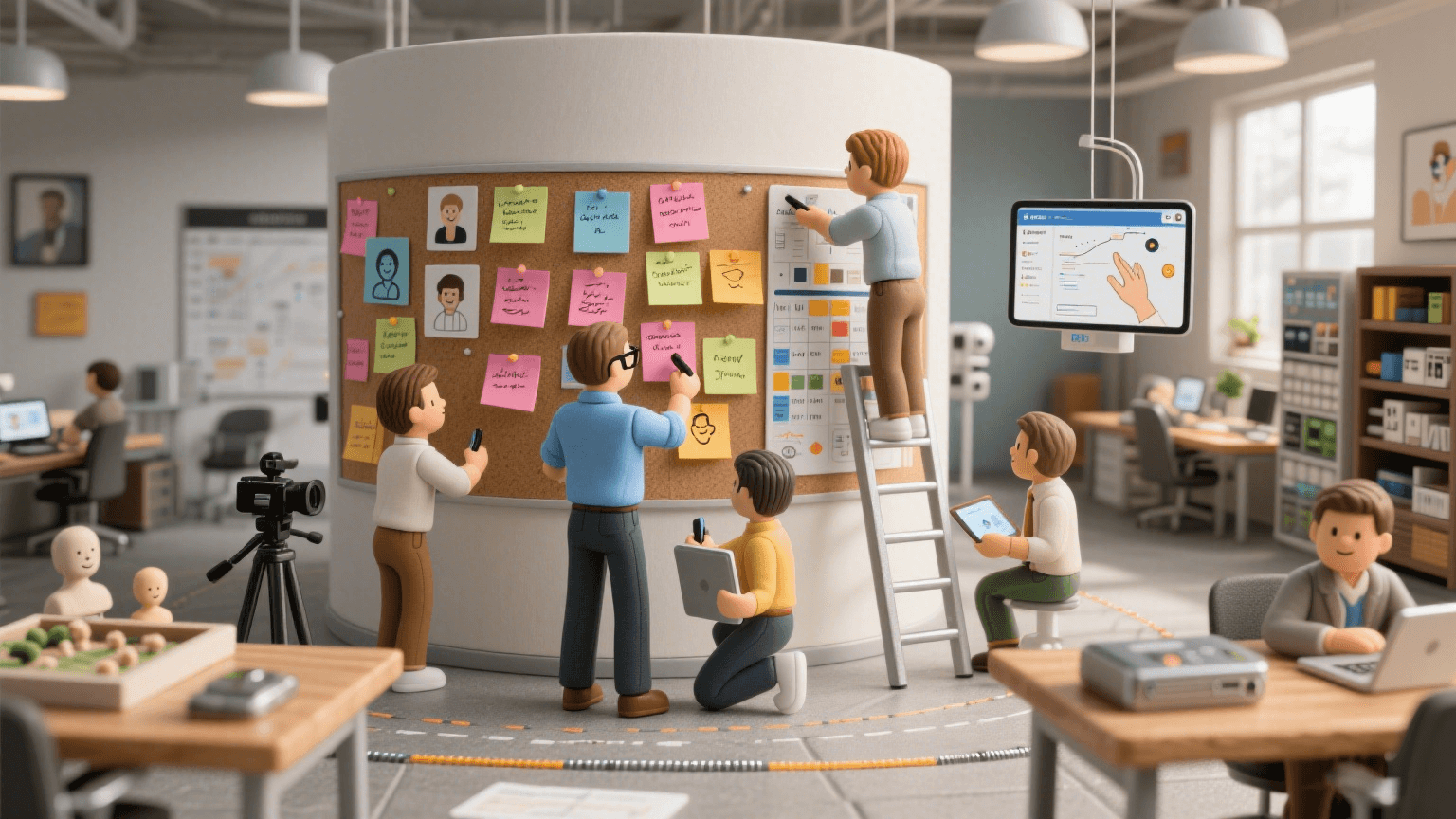
You have probably seen this scenario before: an agile team races through its sprints while personas are forgotten in a corner—or never created at all. The ideals of user-centered design are pushed aside by the relentless pace of two-week sprints. But what if you could have both speed and depth? Build a bridge between “As a user, I want…” and “Sarah needs this because…,” and watch user engagement rise, revenue grow, and churn decline. Your product can become an indispensable part of users’ lives—and you can become the key person who makes it happen.
For many people, agile and user-centered design, including personas, appear difficult to reconcile. However, Alan Cooper, widely known as the “Father of Visual Basic” and a pioneer of personas, has pointed out that integrating user-centered design into agile produces significant benefits:
-
It translates user needs into actionable requirements. Raw feedback becomes a precise narrative that development teams can actually use, eliminating the need to guess what users mean and providing a clear direction.
-
It eliminates wasted work from the outset. When you genuinely understand what users need, you avoid building features they will ultimately reject, reducing expensive rework and ineffective development.
-
It bridges communication gaps between teams. When you, developers, management, and stakeholders share the same understanding, everyone works toward the same goal.
-
It frees up more time to focus on core issues. UX designers handle user research and feature negotiation, allowing developers to concentrate on the technical challenges they enjoy. Less time is spent debating requirements in meetings, and more time is available for creative work.
-
It keeps the team focused on user needs. Throughout development, new ideas are evaluated against real user needs rather than assumptions, helping the team build solutions that truly matter to users.
Next, we will explore why agile and personas are often difficult to combine—and how to fix the problem.
Why Agile and Personas Struggle to Work Together—and How to Fix It
Agile emphasizes speed, while personas emphasize empathy. Many teams fail to achieve both.
For personas to work effectively in agile, they must be treated as evolving, living documents rather than one-time research projects. The problem is not the method itself, but how teams use personas. The following approaches are essential for making the two work together.
Efficiency Anxiety Pushes User Research to the Margins
When two-week sprints collide with months of user research, the research is often abandoned. Many project managers believe they must either skip personas or create them hastily based on assumptions. Traditional persona research processes can indeed be time-consuming:
-
Conducting qualitative research through dozens of user interviews.
-
Analyzing behavioral patterns.
-
Creating personas.
-
Validating them quantitatively through surveys.
Teams worry that in-depth research will lead to scope creep and missed deadlines. Yet skipping this step means building features based on assumptions, increasing support costs, and driving users toward competitors that understand them better.
William Hudson has noted that skipping this critical step can have serious consequences.
Why Personas Can Transform Agile Teams
Personas turn abstract users into tangible people, prevent costly mistakes, and help teams deliver products with genuine value. Here is how they create value at different stages:
Benefits During the Early Stages
-
User stories become more powerful when they are turned into “persona stories.” For example, “Sarah, a busy mother, wants to quickly save a dinner recipe during her commute” creates far more empathy among design and development teams than “I want to save recipes quickly.”
-
When an executive proposes adding an AI chatbot, you can point out that “the overwhelmed freelancer persona from our research needs simple task organization more than additional features.” Real user research is more persuasive than any management assumption.
-
Sprint decisions become significantly faster. Instead of repeatedly debating user preferences, the team can consult the persona document for clarity, remove guesswork, and accelerate development.
Long-Term Value
-
You build the right product from day one. If research with a “technology-anxious grandparent” persona reveals before development that a mute button is unclear, you can avoid substantial future support costs and user frustration.
-
The team aligns around a shared understanding. When evaluating audio compression options, for example, the team discusses “commuter Maya’s needs” rather than only technical specifications.
-
Development waste decreases. Every sprint delivers features that users have genuinely asked for. Conversion rates improve, support costs fall, and the business value becomes clear.
Implementing Personas in Agile: A Step-by-Step Guide
The following approach balances deep user insight with speed in an agile environment:
1. Start Before Day Zero
Alan Cooper reminds us: “Questions about who the users are and what will truly satisfy them must be answered before the first day.” Before the sprint officially begins, conduct the necessary research and establish a foundation of user understanding. Research should not stop when the sprint begins; it must continue throughout the project.
2. Involve Engineers and Stakeholders in User Research
The more people who participate in creating your personas, the stronger those personas become. When engineers understand real users, they shift from “building features” to “solving human problems.” When executives witness real user frustrations, they are less likely to push features that offer no value. Invite the team to participate in interviews and observations to achieve the following:
-
Empathy replaces assumptions: a backend developer understands that they are writing code for “Maria, who loses sales opportunities when the app crashes,” rather than for an anonymous user.
-
Buy-in develops naturally: teams are more likely to support personas they helped create.
-
Insights multiply: engineers may identify technical constraints that researchers overlooked.
3. Create Minimal Viable Personas
Focus on user needs rather than demographics. A statement such as “Jared is a busy parent who orders dinner within 30 seconds while walking to his car” offers more guidance than any age or income range. A minimal viable persona should include only the essential information:
-
Essential demographic details such as name and age;
-
The roles the person plays, such as being both a customer and a passenger;
-
An image, either real or AI-generated, that is relevant to the usage context;
-
Core goals, motivations, and behaviors;
-
A concise usage scenario, pain points, and other relevant information.
Minimal viable personas provide maximum insight with minimal overhead.
4. Make Personas Visible Everywhere
Digital integration embeds personas directly into the development environment. Add persona labels to every task card and provide quick links in the team Wiki or dashboard. Physical visibility also matters: display posters in team spaces, create persona-themed mugs or mouse pads, or even place life-size cardboard persona cutouts in meeting rooms to create a sense that users are present. Ask every day, “How does this feature help Marcus?” Make personas part of the team’s everyday language.
5. Build Sustainable Persona Habits
Make personas part of the team’s regular routine rather than leaving them at the edge of the process. During daily stand-ups, frame updates as “This helps Sarah save recipes more quickly.” During code reviews, consider persona impact by asking, “Which persona does this change affect, and how does it support their goals?”
6. Measure the Real-World Effectiveness of Personas
Evaluate effectiveness by tracking how often personas are mentioned and used. Conduct regular surveys, such as quarterly surveys, to assess how useful the team finds them. Track which personas appear frequently in user stories and which are ignored. Personas that are mentioned regularly are the ones providing genuine value.
Master Personas in Sprint Planning
-
Before sprint planning: When reviewing the backlog, ask, “Will this help Marcus succeed?” If not, consider removing it. Personas should determine what gets built and what does not, helping the team avoid spending time on fringe use cases.
-
During sprint planning: Estimate the size of a story through Marcus’s experience. For example, how difficult is it for him to operate a dropdown menu with one hand on a crowded subway? Use that context to inform estimates. Write acceptance criteria as scenarios, such as: “Marcus creates an invoice during his seven-minute commute.” Context-driven criteria have greater impact.
-
Sprint board structure: Organize the board around Marcus’s journey map so that every card reminds the team how the work improves his life. Appoint a persona advocate to ensure every decision considers the persona’s voice. Pair developers with designers or researchers so they can build a shared understanding of users and create more empathetic solutions.
-
Sprint review demonstrations: Demonstrate complete scenarios rather than listing features. Show how Marcus uses the solution: “Offline-first, because he is often in areas without a reliable signal.” Track meaningful metrics such as invoice creation time, error rates, and support tickets. Real success means users are becoming more successful.
UK Government Digital Service Case Study: Making Personas Work in Agile
The UK Government Digital Service’s Service Performance Team provides a successful example of how to keep personas active and actionable during agile development:
Research Approach and Persona Development
The team used a collaborative research approach involving team workshops, user interviews during the discovery and Alpha phases, and collaborative analysis using sticky notes rather than traditional, heavily documented personas. They created a core persona called “The Conductor,” representing users who needed to review the performance of government services across multiple services.
One innovation was formatting user needs in a standard structure: “As the Conductor, our core persona, I need an overview across government services so that I know where to focus.” They also divided needs into three categories: explicit needs, implicit needs that could be observed but were not directly expressed, and created needs required by the service.
A Hierarchy of User Needs
The team created a three-level structure for organizing user needs:
-
High-level need: “I need to understand the data so that I do not misuse it.”
-
Mid-level need: “I need to trust the data so that it can support my decisions.”
-
Detailed need: “I need to know how reliable the data is so that I can provide a disclaimer when necessary.”
This hierarchy made it easier for the team to identify relationships between needs and prioritize them during sprints.
Direct Translation Into Sprints Without Waste
A key factor in GDS’s success was the way it streamlined the integration of research findings. The team explained: “We do not create PowerPoint presentations or detailed reports. We use the time we save to work more closely with the team.” Through collaborative sticky-note sessions, they converted “personas and research findings on pink notes” into “action items on orange notes,” then incorporated them into the project backlog, sprint planning, and product design.
They also used affinity diagrams to group user observations and quotations, helping the team identify patterns in user behavior and motivation and collaboratively develop personas from those insights.
Embedding Researchers Within the Team
GDS embedded researchers within cross-functional teams rather than having them move between multiple projects. This allowed researchers to:
-
Participate directly in shaping the design;
-
Develop deep expertise in the product or target user group;
-
Serve as advocates for personas within the agile team.
This ensured that user needs remained visible and continued to influence development decisions.
Continuous Refinement
The team established a systematic process by listing all user needs in structured spreadsheets and presenting them in a consistent format. They regularly held team workshops and collaborative analysis sessions to ensure that their understanding of users continued to evolve as the project progressed. They explained: “We will continue using the personas through public Beta and beyond, deepening our understanding of users and ensuring that we continue to meet their needs.”
Significant Results
This approach produced concrete benefits:
-
Workshops created a shared understanding and improved team alignment;
-
Embedded researchers provided faster access to insights and stronger persona advocacy;
-
Research findings were translated directly into actionable sprint tasks;
-
Systematic organization clarified relationships between needs and made priorities explicit;
-
The team developed a shared interpretation of the findings and their meaning, enabling better collaborative decision-making.
Conclusion: Making Agile and Personas Work Together
When persona research begins before the first sprint and personas are maintained as living documents, agile and personas can work together seamlessly. Speed and empathy do not have to be opposites. You can deliver genuinely user-centered solutions in less time.
Your Agile Persona Toolkit
-
Start lean: create minimal viable personas with only a name, goals, and behaviors—detailed demographics are not necessary.
-
Make them visible: add persona cards to task cards, print posters, and use persona names when asking questions during stand-ups.
-
Update them regularly: during every retrospective, incorporate new insights from support tickets and user testing.
-
Use them as a decision filter: before building something, ask, “Will this help Sarah?”
-
Measure the impact: track how often personas are mentioned in conversations, how features are used, and how support costs change.
Transform Your Sprints
-
Write stories as “Marcus needs X because…” rather than using generic user stories.
-
Organize sprint boards around persona journeys rather than feature lists.
-
Demonstrate complete workflows that show how the persona achieves a real goal.
With personas, your product can solve genuine user problems. Every line of code can improve someone’s life. Agile personas transform abstract features into real human impact.