As a user experience designer, you have probably been asked many times: “What process do you follow when designing applications and websites?” The reason this question is so common is simple: the UX process is the foundation of user experience design.
Without a solid UX design process, it is impossible to create a product with a consistently strong user experience. Conversely, a clearly defined and well-executed process can produce exceptional experiences for users.
In this article, we define a general UX design process, explain the typical sequence of its stages, and describe the methods commonly used at each stage.
What Does the UX Process Look Like?
The answer is: it depends. Your design process will vary according to the type of product you are creating. Different projects require different approaches; designing a corporate website, for example, is not the same as designing a dating application.
Most designers are familiar with the concept of design thinking in the UX process. It consists of five stages: Empathize, Define, Ideate, Prototype, and Test. Most design processes are derived from this model.
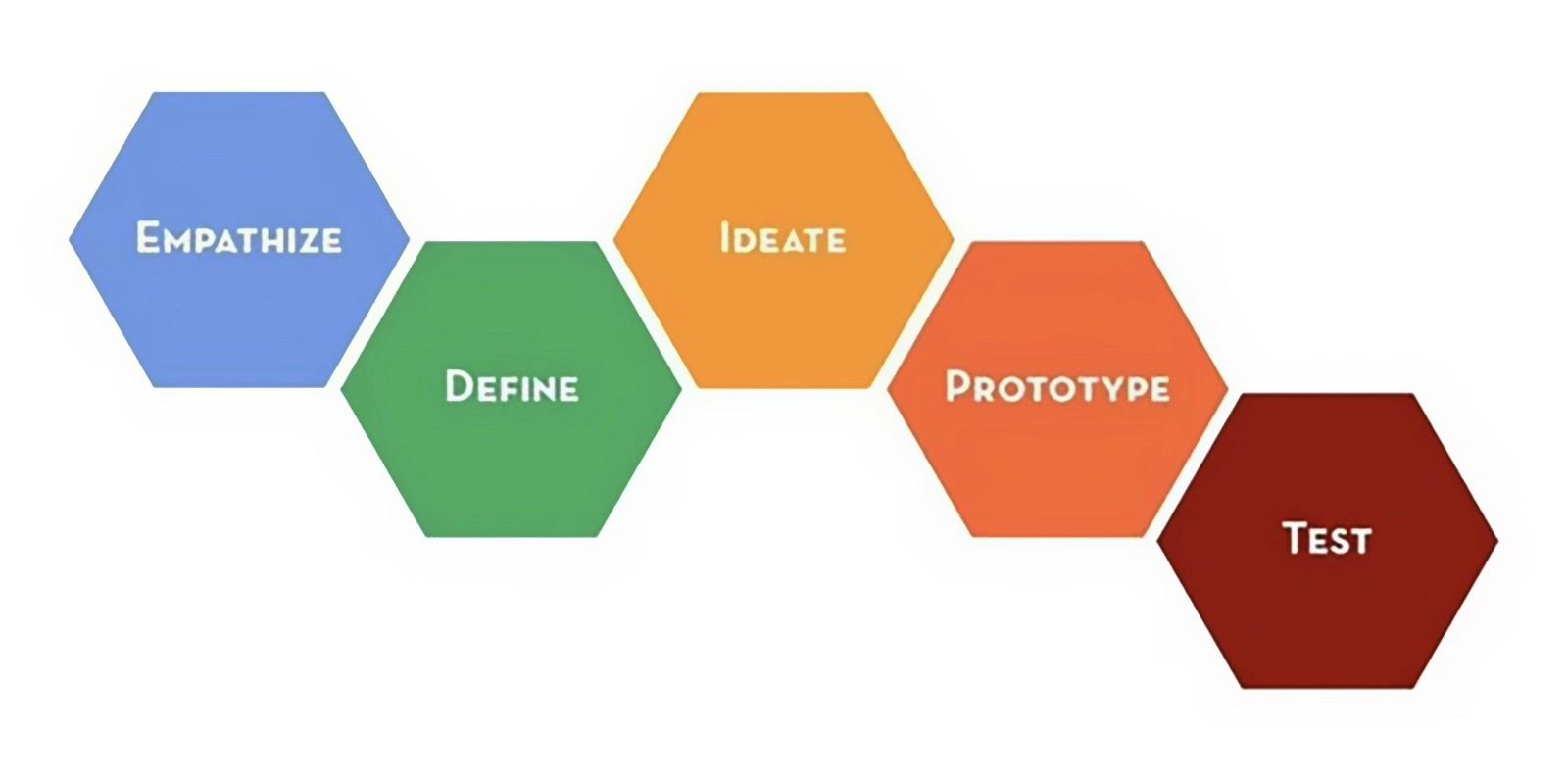
The design thinking process defined by Stanford’s d.school includes five stages: Empathize, Define, Ideate, Prototype, and Test. Image source: Hasso Plattner Institute of Design.
When design thinking is applied to product design, the UX process can be organized into the following five key stages:
· Product Definition · Research · Analysis · Design · Validation
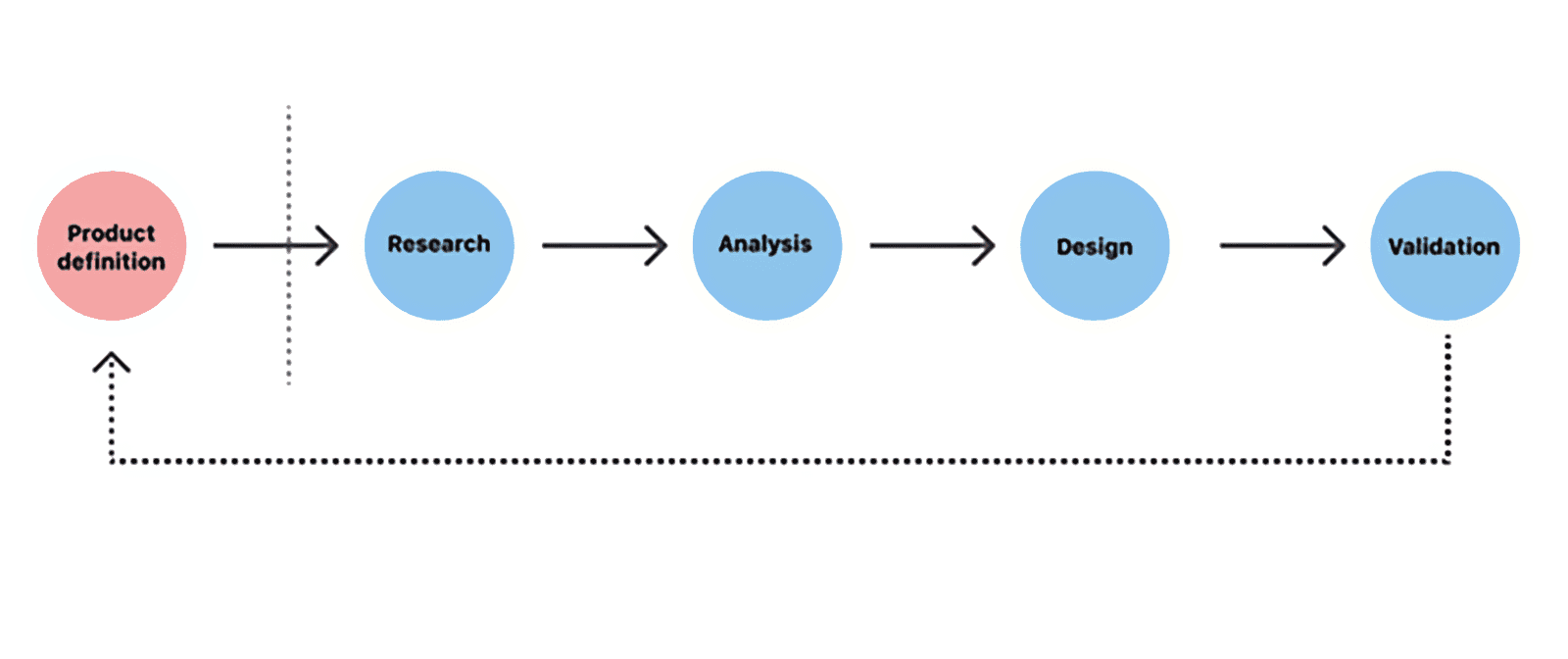
The UX design process consists of five key stages: product definition, research, analysis, design, and validation.
1. Product Definition
One of the most important stages of UX design takes place before the product team creates anything. Before a product can be made, the context for its existence must be understood. The product-definition stage establishes the foundation of the final product. During this stage, UX designers and stakeholders brainstorm at the highest level—the underlying concept of the product.
This stage commonly includes:
· Stakeholder interviews: Interview the principal stakeholders to collect insight into business objectives.
· Value-proposition mapping: Examine the product’s essential characteristics and value proposition—what it is, who will use it, and why they will use it.
· A value proposition helps the team and stakeholders align on what the product should be and how it will meet both user and business needs.
· Concept sketching: Create an early model of the future product, such as a low-fidelity paper sketch of the product architecture.
This stage usually concludes with a project kickoff meeting. The meeting brings all key participants together and sets appropriate expectations for the product team and stakeholders. It covers a high-level overview of the product’s purpose, the team structure—who will design and develop it—the communication channels through which people will collaborate, and stakeholder expectations such as key performance indicators and the definition of product success.
2. Product Research
Once the idea has been defined, the product team moves into the research stage. This normally includes user research and market research. Experienced product designers regard research as a valuable investment: strong research informs design decisions, and investing early can save substantial time and money later in the process.
The product-research stage varies more between projects than almost any other stage. Its scope depends on product complexity, schedule, available resources, and many additional factors.
This stage may include:
· Individual in-depth interviews: Excellent product experiences begin with a deep understanding of users. In-depth interviews provide qualitative information about the target audience, including their needs, desires, fears, motivations, and behavior.
· Competitive research: Research helps UX designers understand industry standards and identify opportunities for the product within a specific market segment.
3. Analysis
The purpose of the analysis stage is to derive insight from the information collected during research—to move from what users want, think, or need to why they want, think, or need it. During this stage, designers test whether the team’s most important assumptions are correct.
This stage of the UX process commonly includes:
· Creating user personas: Personas are fictional characters representing different types of product users. During product design, they can be used as realistic representatives of the target audience.
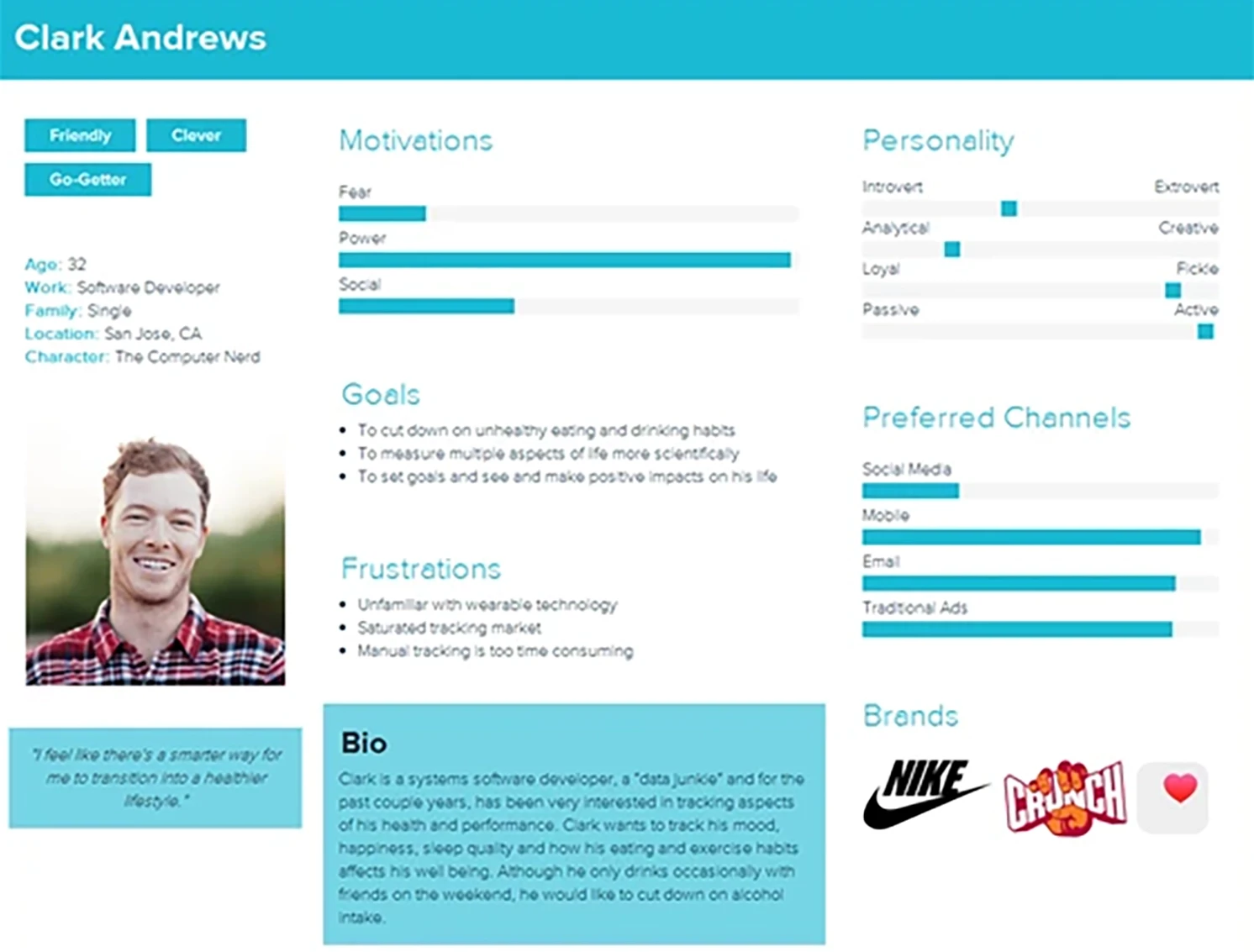
Example user persona showing characteristics such as gender, age, and motivation
· Creating user stories: A user story helps designers understand interaction with a product or service from the user’s perspective. It is commonly written in the following form: “As a [user], I want to [achieve a goal] so that [motivation or benefit].”
· Storyboarding: A storyboard helps designers connect user personas with user stories. As the name suggests, it is essentially a visual narrative of a user’s interaction with the product.
4. Design
Once users’ requirements, needs, and expectations are understood, product designers move into the design stage. The product team undertakes a range of activities, from establishing the information architecture (IA) to creating the actual user interface. An effective design stage is both highly collaborative—requiring active involvement from everyone working on the product—and iterative, repeatedly testing and refining ideas.
The design stage commonly includes:
· Sketching: Sketches are the simplest and fastest way to visualize ideas. They can be created by hand on paper, on a whiteboard, or with a digital tool. Sketching is particularly useful during brainstorming because it allows the team to visualize multiple directions before choosing one.
· Creating wireframes: A wireframe helps designers visualize the basic structure of a future page, including its key elements and the relationships between them. It acts as the product’s skeleton and commonly forms the basis of mockups and prototypes.
· Creating prototypes: Wireframes primarily address structure and visual hierarchy—how the product looks—while prototypes address the actual interactive experience—how it looks and feels. A prototype is a simulation of the product and can be low-fidelity, such as a clickable wireframe, or high-fidelity, such as a coded prototype.
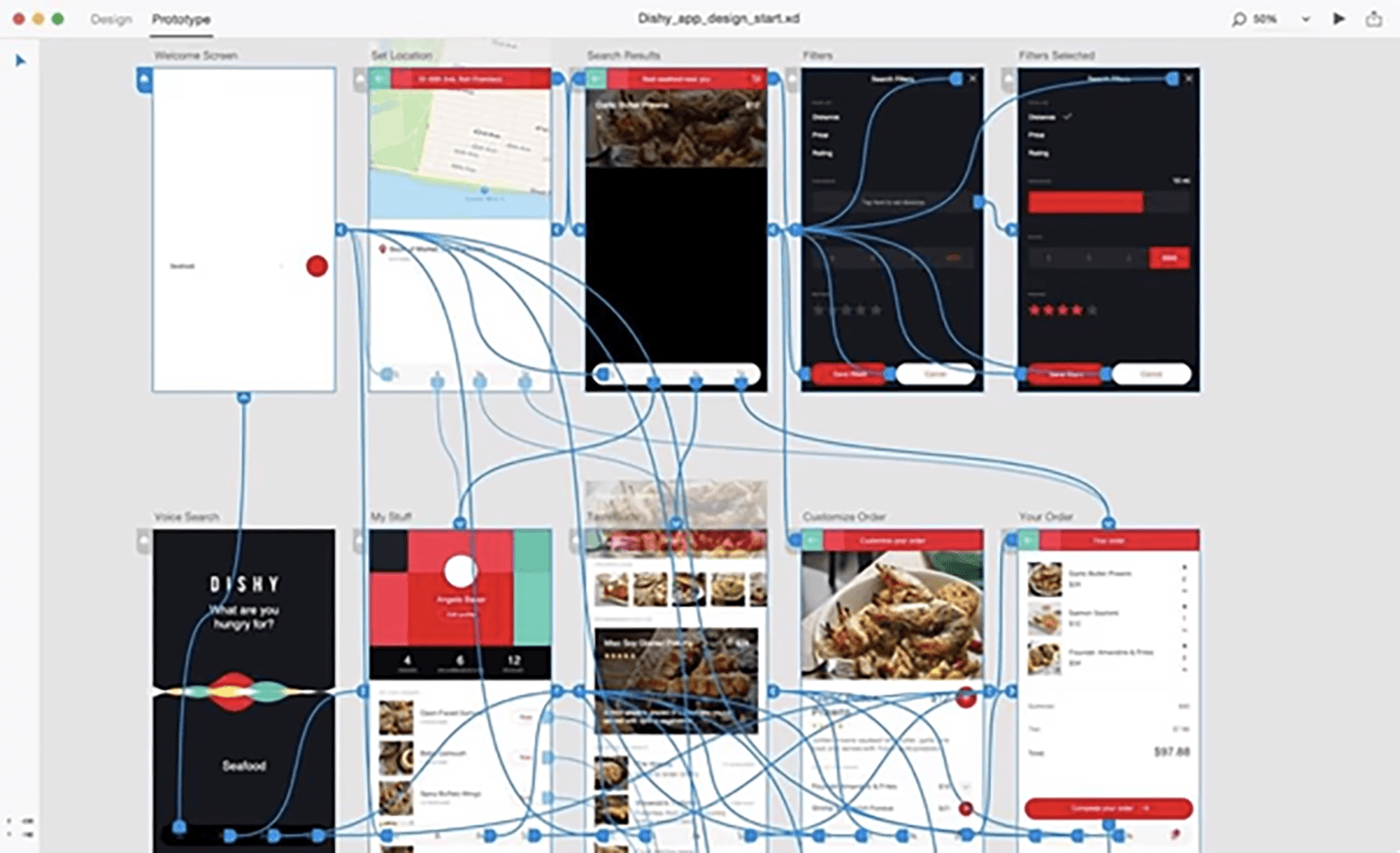
· Creating design specifications: Design specifications contain all visual assets and guidance developers need to transform a prototype into a working product.
· Creating a design system: For larger projects, designers often build a system of components, patterns, and styles that helps designers and developers maintain consistency.
5. Validation (Testing)
Validation is an essential step because it helps the team determine whether the design works for users. It usually begins after a high-fidelity design has been completed, because testing realistic designs produces more valuable feedback from end users. Through a series of user-testing activities, the team validates the product with stakeholders and intended users.
The validation stage may include the following activities:
· Dogfooding: Once the design team has iterated the product to a usable level, it should test the product internally. Team members should use it regularly and complete common tasks to identify major usability problems.
· Testing sessions: User testing with people who represent the target audience is extremely important. Possible formats include moderated and unmoderated usability testing, focus groups, beta testing, and A/B testing.
· Surveys: Surveys are effective tools for gathering both quantitative and qualitative information from real users. UX designers can include open-ended questions such as “Which part of the product do you dislike?” to collect opinions about specific features.
· Analytics: Quantitative information from analytics tools—including clicks, navigation time, and search queries—is highly valuable for understanding how users interact with the product.
How to Improve the UX Design Process
Now that you understand how the stages relate to one another, consider the following recommendations for improving the process:
Embrace the Iterative Nature of Design
UX design is not a linear process; it is iterative. Its stages overlap substantially and often require movement back and forth. Consider research and design: as a UX designer learns more about the problem and the users, earlier design decisions may need to be reconsidered. Accept that a design will never be perfect, and continue researching user needs so the product can serve them more effectively.
Focus on Effective Communication
Communication is a core UX design skill. Creating a strong design is one challenge; communicating it is equally important. Hold regular design-review sessions and meet with stakeholders to ensure that everyone understands and agrees with the product decisions.
Conclusion
There is no universal solution in the user experience design process. Regardless of the specific approach, however, every design process has the same objective: to create an excellent product for users. Apply the methods that work best for the project, discard those that do not, and continue improving the UX process as the product evolves.