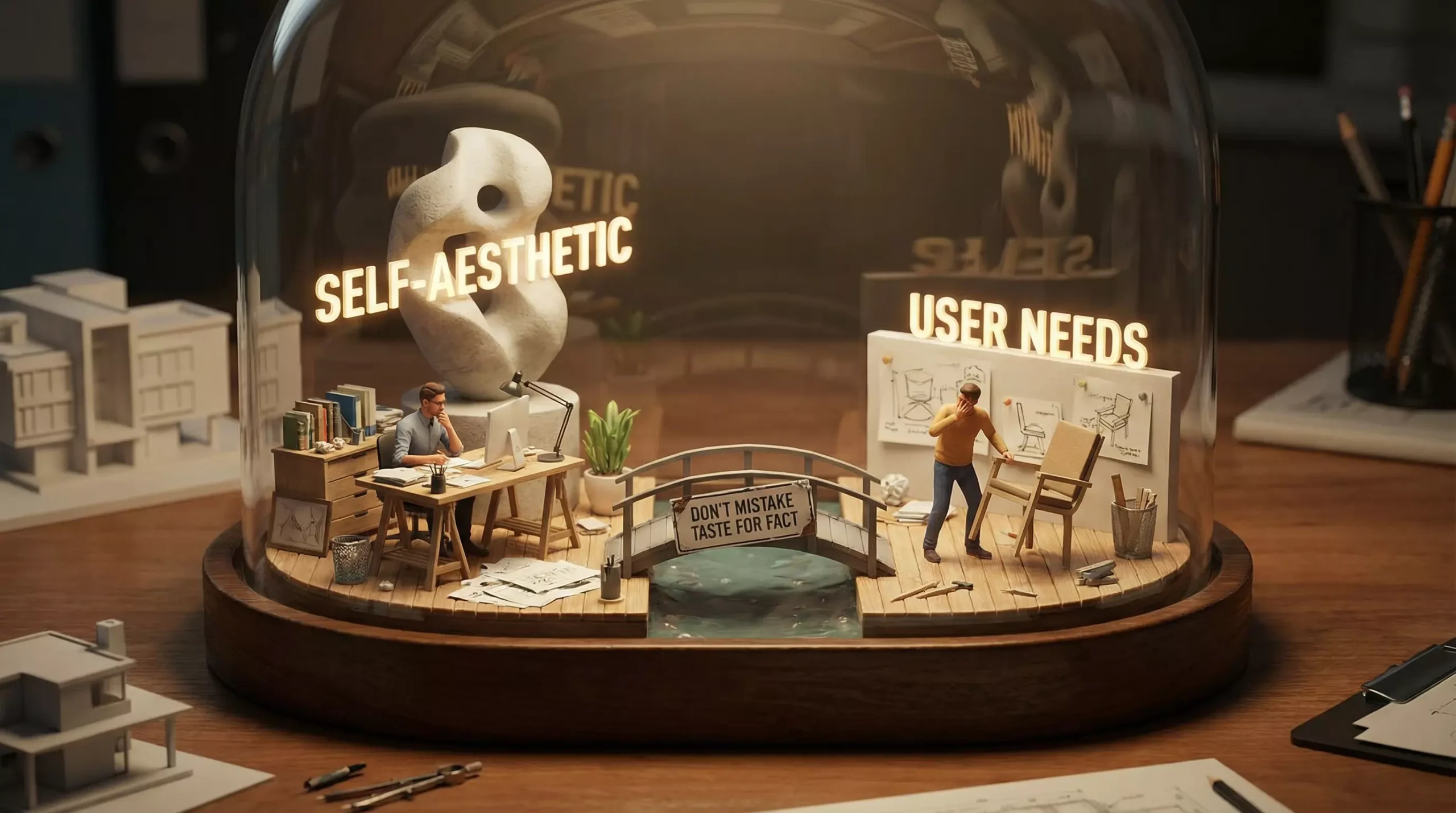
In UI design and user experience design, every designer brings personal taste into the work. This is entirely natural. Your preferences in typography, color, and layout all influence the final result.
The real problem begins here:
👉 When you treat “aesthetic preference” as “fact,” the design begins to move away from the user.
You say, “This looks better.”
The user asks only, “Is this easier to use?”
The gap between these two questions is the source of many design problems.
I. Aesthetics Are Not the Problem; Treating Them as the Standard Is
A common situation in many UI design projects is:
The design discussion becomes a competition over “who has better taste” instead of “which solution is more effective.”
For example:
-
“This color palette feels more premium.”
-
“This style is more fashionable.”
-
“This page feels more comfortable.”
The problem with these statements is that none can be validated.
👉 Aesthetic preference is subjective, but design must be explainable.
In a professional UI design company or mature UI/UX design team, decisions rarely rely on “I think.” They are based on:
-
User behavior
-
Usage scenarios
-
Data feedback
-
Business objectives
Aesthetics can contribute to design, but should not control it.
II. The Starting Point of High-Quality Design: Put Preference After Evidence
One essential ability of an excellent designer is recognizing personal preferences and controlling them deliberately.
This does not reject aesthetics. It means: 👉 Make aesthetics serve the method.
Common approaches include:
-
Validate design solutions through A/B testing
-
Analyze competitors and industry benchmarks
-
Track user-behavior metrics such as click-through and conversion rates
-
Collect feedback from real users
Once this information exists, the design decision is no longer “choose the solution you like,” but “choose the solution that works more effectively.”
This shift is critical in UI/UX design because it determines whether you are “expressing yourself” or “solving a problem.”
III. The Essence of Design Is Not Greater Beauty, but Greater Clarity
Many designers fall into the same misconception:
They believe the objective of design is to make something “look better.”
From a user-experience perspective, however, three things matter more:
-
Whether the information is easy to understand
-
Whether the operation is smooth
-
Whether users can complete the task quickly
These are the core values of UI design.
Users will not remember:
Which gradient, typeface, or visual style you used.
They will remember only:
👉 Whether the product was easy to use
👉 Whether the process felt smooth
👉 Whether they felt understood
IV. From “Expressive Design” to “Validated Design”
In many UI design companies, a key step in a designer’s growth is moving from expressive design to validated design.
Expressive design:
-
Relies on aesthetics
-
Relies on experience
-
Relies on personal judgment
Validated design:
-
Relies on data
-
Relies on testing
-
Relies on outcomes
When you begin supporting design with data, feedback, and outcomes, it becomes genuinely persuasive.
This is why designers on demanding UI/UX design teams must know not only how to design, but how to explain the design.
Conclusion
Aesthetics are part of design, but should not be its evidence.
Excellent UI design does not say, “I think this looks better.”
Instead, it asks:
👉 Is it easier for users to understand?
👉 Can they complete the task more smoothly?
👉 Has the outcome been validated?
When you begin placing aesthetics after evidence,
you move from being “someone who can make designs”
to being “a designer worthy of trust.”