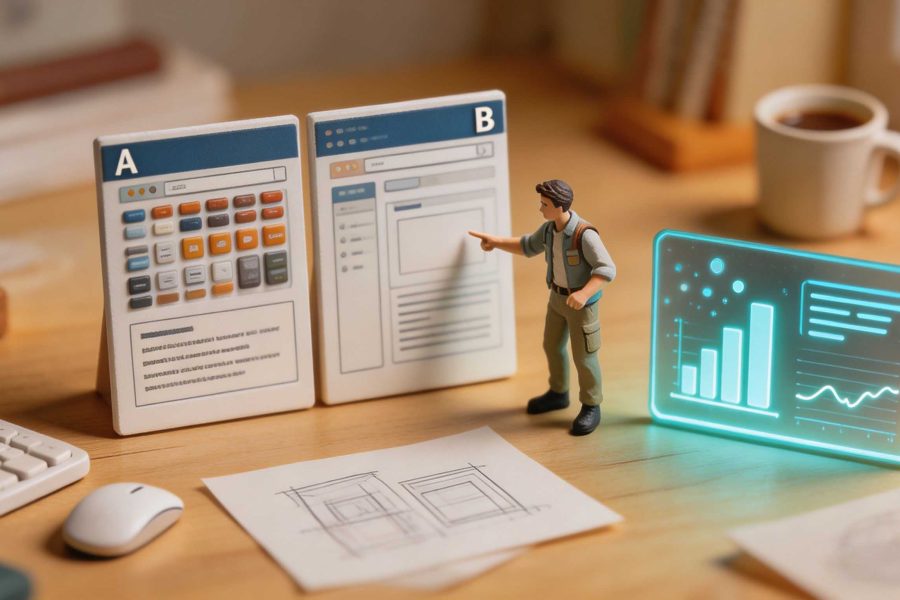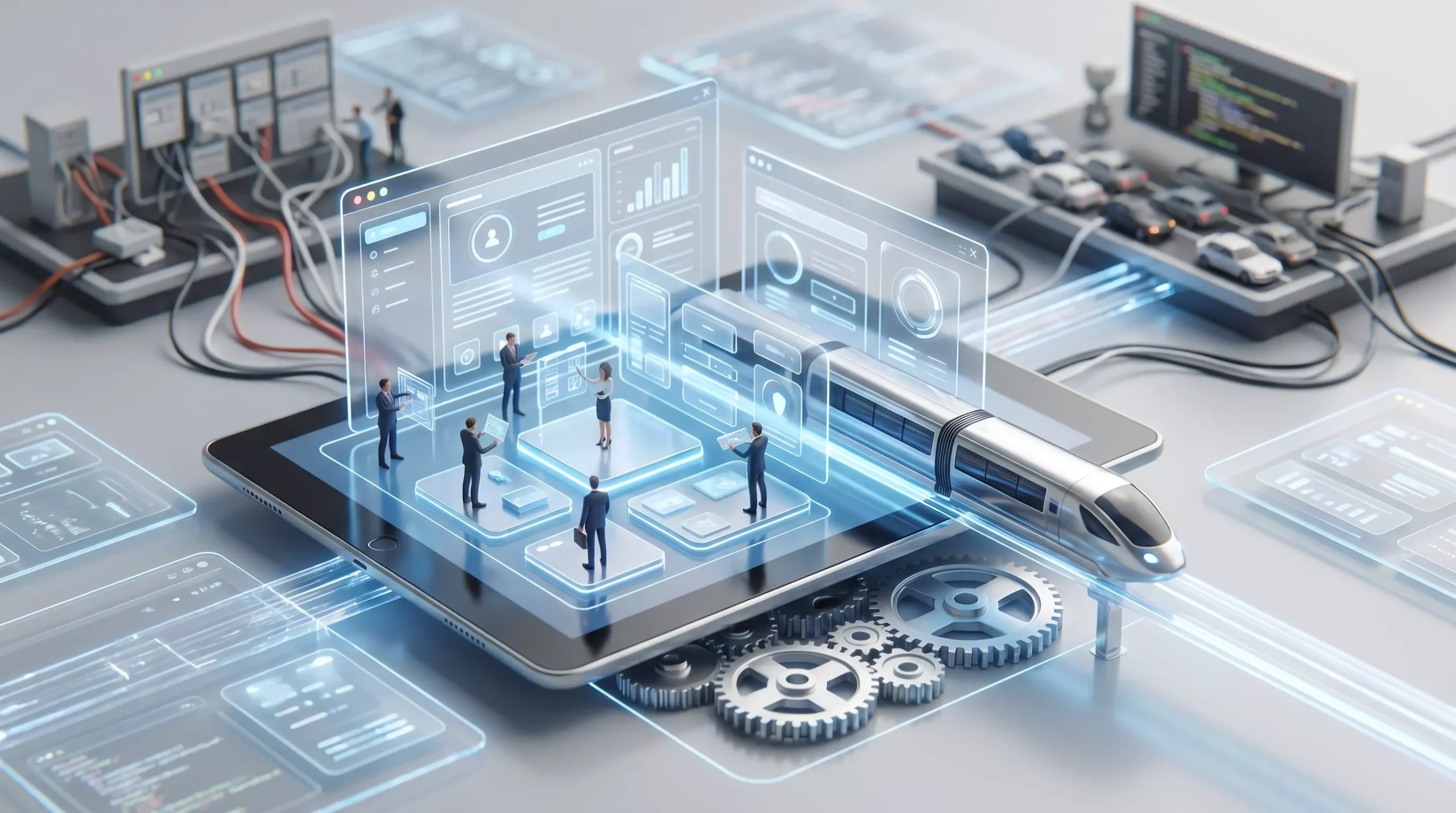
What Is Product UI/UX Design?
In the digital economy, product UI/UX design has become one of a company’s core competitive capabilities. UI, or User Interface design, is the most direct visual layer between users and a product and determines its appearance and visual consistency. UX, or User Experience design, goes deeper into user behavior and usage logic and determines whether the product is genuinely easy to use.
Neither can be neglected. Users quickly abandon products that look good but are difficult to use, while rough-looking interfaces struggle to build brand trust and a professional image even when they function well. Professional UI/UX design services combine the two to help companies create digital products that are both attractive and efficient.
💡 Core definition: UI design addresses “how it looks,” while UX design addresses “how it feels to use.” An excellent product-design company combines both into a complete design solution.
UI Design vs. UX Design: What Is the Difference?
UI design includes building color systems, defining typography, creating icons, establishing component standards, and setting the visual direction. UI designers ensure that the product interface is visually consistent, aligned with the brand, and appropriate for the aesthetic preferences of the target audience.
UX design focuses more on the user journey: How do users discover the product? How do they complete core tasks? At which points are they likely to become lost or abandon the process? Through user research, information architecture, prototype testing, and other methods, UX designers systematically reduce the difficulty of using the product and improve task completion and overall satisfaction.
Why Do Companies Need Professional UI/UX Design?
Many companies assume that interface design merely “makes the product look better” and has little impact on the core business. This is a dangerous misconception. In reality, product experience directly affects retention, conversion, and brand reputation, creating a material impact on revenue.
Users who will not return after a poor experience: 88%
Average conversion-rate increase after UX optimization: 200%
Average return on UX investment: 100:1
What Can Professional Design Deliver to a Business?
Improve user retention: A smooth and intuitive experience helps users build habits and significantly reduces churn. For SaaS products, apps, and e-commerce platforms in particular, the quality of the user experience directly affects renewals and repeat purchases.
Reduce development and maintenance costs: Many companies overlook design during development and are forced to revise functional logic and interface layouts repeatedly after launch, wasting substantial engineering resources. Conducting systematic UI/UX design in advance reveals and resolves problems at the prototype stage, greatly reducing later modification costs.
Strengthen a professional brand image: A consistent and refined visual language builds user trust. For B2B companies especially, the product’s professional appearance directly affects potential customers’ willingness to make a decision.
Increase market competitiveness: In highly homogeneous markets, product experience is often the key point of differentiation. High-quality UI/UX design helps companies stand out among numerous competitors.
The Complete Professional UI/UX Design Process
Unlike simply “drawing interfaces,” a professional product UI/UX design company follows a scientific and disciplined process to ensure every design decision has a basis and every interface addresses genuine user needs.
01. User Research and Requirements Analysis: Conduct in-depth interviews with target users, create personas and usage scenarios, and identify genuine pain points and expectations.
02. Information Architecture and Flow Planning: Plan the functional structure, optimize user paths, and simplify core task flows as much as possible.
03. Low-Fidelity Prototyping: Create wireframes rapidly to validate core interaction logic and identify design problems early.
04. Visual Design and Standards: Establish the complete visual language and deliver high-fidelity designs together with design-specification documentation and Design Tokens.
05. User Testing and Iterative Optimization: Gather feedback through testing with real users and refine the design continuously to ensure the launched result meets its objectives.
06. Development Handoff and Implementation Support: Collaborate closely with developers and provide exported assets, measurements, and interaction specifications to preserve design fidelity.
Which Types of Companies Need UI/UX Design Services Most?
Professional UI/UX design services create important value at every stage of a company’s development. Three common scenarios are:
Startups: Establish a Strong First Impression Through Design
For a startup, the product is often the first point of communication with users and investors. Professional product-interface design helps an early-stage team build credibility quickly, attract seed users, and demonstrate product maturity and execution ability during fundraising presentations. Many angel investors treat product-design quality as direct evidence of the team’s ability to execute.
Small and Medium-Sized Businesses: Improve Conversion and User Satisfaction
Small and medium-sized businesses often have an established user base but encounter a growth bottleneck. Systematic UX optimization identifies critical points of user loss and improves registration, payment paths, and core-function experiences. This can significantly increase conversion and repeat purchase without requiring additional traffic.
Large Enterprises: Systematize the Design Language and Improve Efficiency
Large enterprises frequently face inconsistent interfaces caused by multiple product lines and teams. Establishing an enterprise design system with unified component libraries and design standards improves experience consistency while substantially increasing the efficiency of product design and development.
How to Choose the Right UI/UX Design Company
The quality of design companies varies significantly. When selecting a product UI/UX design provider, companies should evaluate the following dimensions:
1. Portfolio and Industry Experience
Review completed work first, with particular attention to projects in a similar industry or product category. Look for case studies that explain the design reasoning clearly rather than displaying attractive screenshots alone.
2. Completeness of the Design Process
A professional design company does not merely “beautify” interfaces. It begins with user research, proceeds through prototype testing, and only then moves to visual implementation. If a company skips research and immediately produces visual concepts, design quality is difficult to guarantee.
3. Communication and Handoff Standards
A strong design partner provides a clear project-management process and standardized deliverables—including design-system documentation, interaction specifications, and a reusable component library—instead of handing over several images and considering the work complete.
4. Understanding of Commercial Objectives
At a leading UI/UX design company, designers understand not only aesthetics, but also business logic and user psychology. They can translate the company’s commercial objectives into concrete design strategies and make design genuinely support growth.
✅ Summary of selection criteria: A complete portfolio + a clear process + standardized delivery + an understanding of commercial objectives = a trustworthy UI/UX design partner.
Frequently Asked Questions
Q: What Is the Difference Between UI/UX Design and Web Design?
Web design generally refers to the visual presentation of a website. UI/UX design has a broader scope, covering apps, SaaS systems, mini programs, and other digital products, with greater emphasis on systematic user research, interaction logic, and experience optimization.
Q: How Long Does a UI/UX Design Project Usually Take?
Depending on product complexity, schedules range from two weeks to three months. Optimizing a small functional module usually takes 2–4 weeks. Designing a complete product from the ground up generally requires 6–12 weeks, including research, design, and testing.
Q: Do You Participate in Development After the Design Is Complete?
Yes. We provide integrated services from design through development, including website development, app development, and brand-visual implementation, ensuring the final product reproduces the design accurately and avoiding the problem of “beautiful mockups but a distorted launched product.”
Q: How Is the Effectiveness of UI/UX Design Evaluated?
Key indicators include user task-completion rates, time on page, registration or payment conversion, and user-satisfaction metrics such as CSAT and NPS. At the beginning of the project, we define the key indicators together with the client and continue tracking them after launch.